

Exporting corrugated boxes by sea demands precise packaging design and process control to make sure cartons arrive undamaged and ready for use. At Boxonaa, we pair technical packaging knowledge with export logistics experience to protect products from moisture, stacking stress, and rough handling from factory to vessel and beyond.
Planning and order confirmation
We begin by understanding the destination, transit route (sea), storage conditions, and customer requirements. Based on that, Boxonaa specifies flute type, board grade, ECT/BCT targets, inner dimensions, and any surface or moisture protection needed. A physical sample or digital mock-up is produced for client sign‑off before production.
Choosing materials and strength
Select flute profiles and board construction (single, double, triple wall) to meet compression and stacking needs. We set minimum ECT or BCT values and burst strength based on pallet height and expected loads. For humid routes, Boxonaa recommends moisture-resistant liners, coated papers, or light wax/lamination where appropriate.
Moisture protection and climate control
Corrugated strength decreases in high humidity, so we control factory humidity and ensure boards are dry before packing. For sensitive shipments, we use internal vapor-barrier liners, sealed polyethylene bags, desiccants, and external waterproofing (stretch-wrap, pallet caps). These measures preserve board performance during long sea voyages.
Internal protection, inserts and cushioning
To prevent movement and absorb shocks, Boxonaa engineers die-cut inserts, corrugated partitions, molded pulp trays or foam supports tailored to each product. Cushioning materials (kraft paper, bubble, molded pulp) are used where needed; heavy products are packed to distribute weight evenly and avoid point loads that reduce compression life.
Carton packing and sealing best practices
We use right-sized cartons and fill voids to prevent shifting. Vulnerable areas (corners and edges) are reinforced, and sealing follows an H-seal method with high-tack, water-resistant tape or hot-melt glue. All joints are inspected to ensure they remain secure under transit stress.
Palletizing and stacking for sea freight
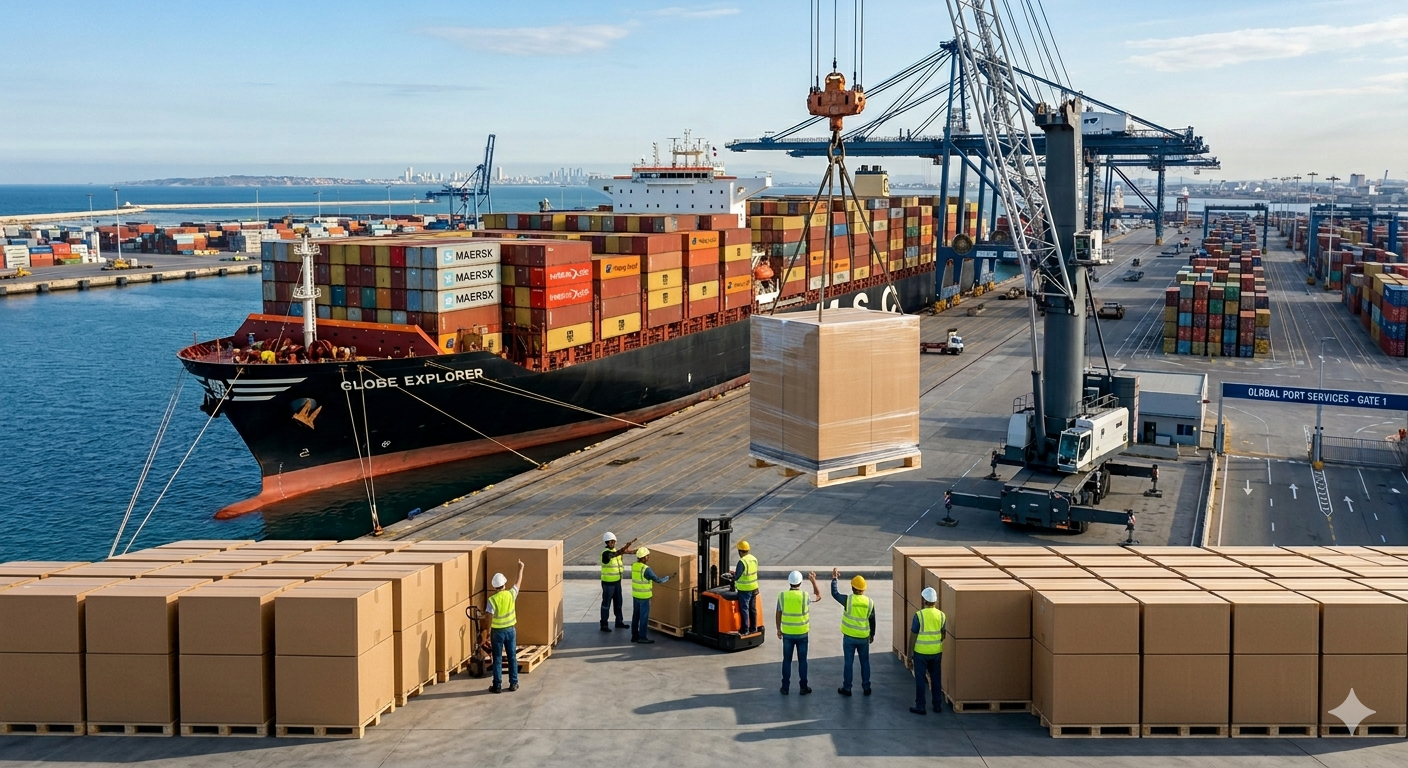
Boxonaa follows standardized pallet dimensions and optimal stacking patterns (column, brick, or pinwheel) to maximize stability. Layers are interlocked when possible, secured with corner protectors, and wrapped or banded. Stack heights are limited according to box compression ratings, and top clamping boards are used to prevent crushing.
Unitization and voyage readiness
Whole pallets are stretch-wrapped and strapped; we add desiccants for moisture-prone cargo and recommend ventilated or refrigerated containers when required. Pallet labels show handling marks, weight, and destination, making sure stevedores and handlers understand the cargo’s needs.
Container loading and lashing
Boxonaa coordinates experienced teams for container stuffing to ensure even weight distribution and adequate dunnage, blocking, and bracing. We use timber, airbags, and lashing where necessary to prevent movement during sea motion and transshipment.
Documentation, labelling and compliance
Every shipment includes a complete packing list (per carton and pallet), commercial invoice, bill of lading, and any required certificates or permits. Cartons are clearly marked with handling instructions (Keep Dry, This Side Up), product description, weight, and origin to avoid mis‑stowage.
Quality control and testing
Pre‑shipment QC includes random carton inspections, seal strength checks, and verification of ECT/BCT compliance. For new or repeat large orders, Boxonaa can run or reference drop, vibration, and stacking tests to validate the design and reduce claim risk.
Logistics coordination and tracking
We manage inland haulage, container bookings, and port gate‑in to prevent demurrage. Boxonaa works with trusted freight forwarders for FCL or LCL bookings and provides tracking updates and ETA notifications to buyers throughout the voyage.
Post‑arrival support and claims handling
On arrival, the consignee inspects cartons and documents any damage. Boxonaa maintains production records and photos of packing and container stuffing to support claims if needed. We use claim feedback to refine packaging specs and processes for future shipments.
Boxonaa’s standard export packing flow (summary)
- Client confirms specs → sample approval.
- Production under climate control → final QC.
- Inner packing: inserts + protective wraps.
- Carton sealing using H‑seal method.
- Palletization: corner protectors, stretch‑wrap, banding.
- Container stuffing with dunnage and desiccants.
- Documentation handover to forwarder → sea voyage.
- Tracking, arrival notification, and after‑sales support.
Packing checklist (printable)
- Board grade and ECT/BCT specified.
- Moisture barrier or liners for humid routes.
- Correct inserts and cushioning used.
- Appropriate carton sealing (H‑seal).
- Stable palletizing with corner protection.
- Desiccants or dehumidifier for sensitive cargo.
- Clear labels and complete shipping documents.
- Pre‑shipment QC and test records.
Why choose Boxonaa for sea exports
Boxonaa blends packaging engineering with export logistics experience so your corrugated boxes reach destinations intact and usable. We provide specification guidance, sample approvals, moisture protection, strong palletization, and clear documentation — all designed to reduce damage, claims, and delays while helping buyers get started quickly.
Call to action
Need a packaging solution for sea export? Contact Boxonaa for a free packing assessment, sample development, or a printable factory checklist tailored to your product and route.